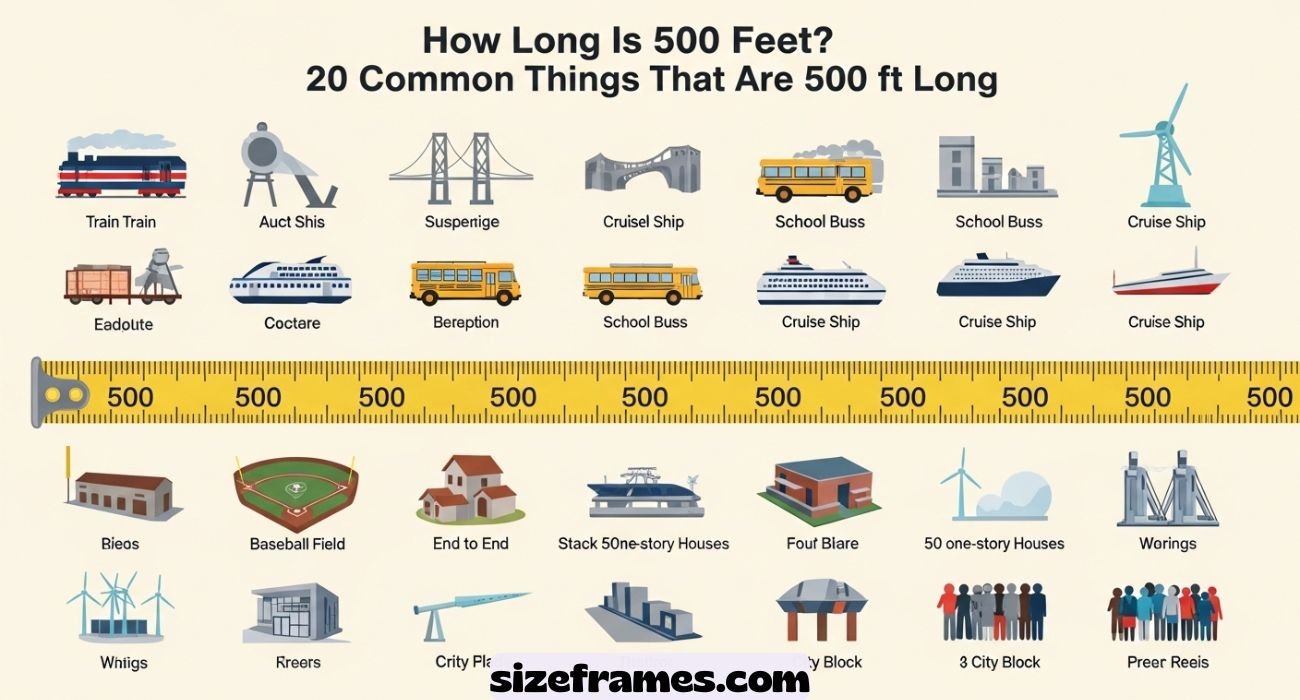
How Long Is 500 Feet? 20 Common Things That Are 500 ft Long
500 feet is a measure of distance. It equals 500 steps of one foot each. In meters, it is about 152 meters. This distance is almost one and a half football fields. It is also the height of a 50-story building. Thinking about 500 feet helps us understand long spaces.
Imagine walking across a big park. That is about 500 feet. Picture five blue whales lying in a line. Think of a pier stretching into the water. These examples make 500 feet easier to see. You can imagine it in cities, parks, or nature. It is a fun way to learn.
How long is 500 feet matters in many places. Airports, bridges, and docks use this distance. Walking 500 feet takes about two minutes. Large buildings or ships often reach this size. Knowing this distance helps in daily life. It also makes planning and measuring much easier.
How Big Is 500 Feet?
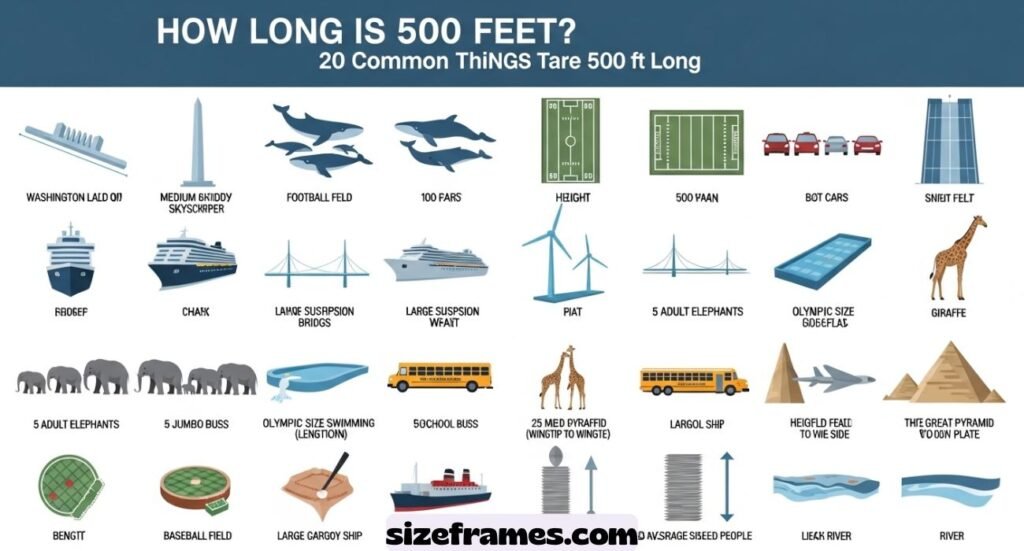
Visualizing 500 feet can be tricky because it is a long distance. To understand it better, think of a football field. A standard American football field, including the end zones, is 360 feet long. This means 500 feet is almost one and a half football fields laid end to end. Another way to imagine it is by considering a blue whale. A single blue whale measures about 100 feet, so 500 feet is equivalent to five blue whales long lined up.
In urban landscapes, 500 feet is roughly the height of a 50-story building, towering over most city streets and giving a striking sense of scale. Even a casual walk of 500 feet would take around two minutes at an average pace, which gives a practical feel for this distance in everyday life.
How Long Is 500 Feet?
To provide a complete picture, here is a table showing 500 feet in meters, yards, inches, miles, and other common units. This helps anyone trying to measure or convert this distance in different contexts.
| Measurement Type | Equivalent of 500 Feet |
| Inches | 6,000 inches |
| Yards | 166.67 yards |
| Meters (m) | 152.4 meters |
| Kilometers (km) | 0.1524 km |
| Miles | 0.0947 miles |
| Centimeters (cm) | 15,240 cm |
| Millimeters (mm) | 152,400 mm |
| Time to Walk | ~2 minutes (walking 500 feet) |
By looking at the table, you can see why 500 feet is a meaningful measurement. Whether converting 500 ft in miles, 500 feet in meters, or 500 ft in inches, this distance can be applied in construction, aviation, or even daily walks.
What Does 500 Feet Look Like?
To truly visualize 500 feet, it helps to think of real-world examples. Imagine walking across one and a half football fields or standing at the top of a building that reaches the height of a 50-story building. You could line up five blue whales and reach 500 feet. From an aerial perspective, a distance of 500 feet is also the same as 2.5 Ferris wheels stacked vertically, or the length of half a large cruise ship size.
This measurement can also represent the length of a pier extending into the water, or the depth of some small cliffs and canyons. By comparing it to objects and structures familiar to Americans, it becomes much easier to understand and remember.
Things That Are 500 Feet Long
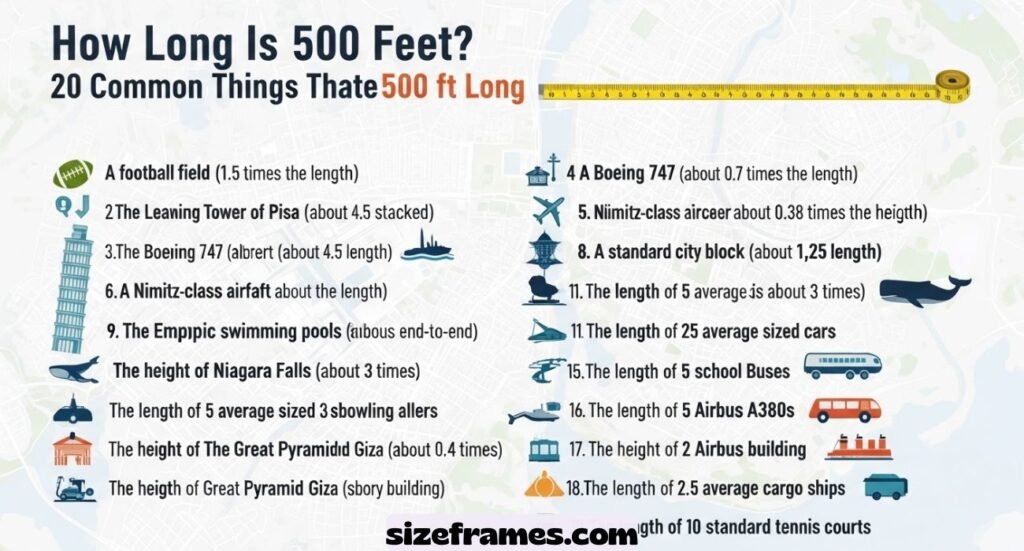
Knowing 500 feet examples in everyday life makes the distance practical. This section highlights real-world objects and structures that are around 500 feet long. From iconic landmarks to marine vessels, these examples help you visualize 500 feet easily.
Seattle’s Space Needle
The Seattle Space Needle height is 605 feet, slightly taller than 500 feet. Built in 1962 for the World’s Fair, it has become a symbol of Seattle and innovation. Standing at the observation deck, you can look over the city, visualize 500 feet, and understand how this distance compares to the surrounding buildings and streets. The Space Needle is a great benchmark for anyone trying to imagine this height.
1.5 Football Fields
A standard length of a football field, including the end zones, is 360 feet. To reach 500 feet, you would need one and a half fields. For Americans familiar with football, this makes it easy to visualize 500 feet. It’s a practical comparison that can help when thinking about large outdoor spaces, school fields, or parks.
5 Blue Whales Lined Up
The largest animals on Earth, blue whales measure about 100 feet each. Lining up five of them would give you a total of 500 feet, which is a remarkable way to understand this distance. Thinking in terms of wildlife, these gentle giants provide a vivid sense of scale. Using five blue whales long as a comparison also helps people understand massive distances in a natural and engaging way.
2.5 Ferris Wheels
A typical Ferris wheel is around 200 feet tall. Multiplying this by 2.5 equals approximately 500 feet. By comparing to ferris wheel height, especially ones Americans have seen at local fairs or amusement parks, you can easily visualize 500 feet vertically or horizontally. This is an example of a recreational object that illustrates the distance in a fun way.
Large Cruise Ships
A large cruise ship size often exceeds 1,000 feet in length. Therefore, 500 feet is roughly half the length of these massive floating cities. Cruise ships carry thousands of passengers, feature multiple decks, pools, theaters, and restaurants. By understanding 500 feet long objects in terms of cruise ships, it becomes clear how this distance applies to transportation, leisure, and engineering.
Oil Tankers
Oil tankers are designed to carry massive amounts of crude oil. Some smaller tankers measure 500 feet in length. Knowing oil tanker dimensions and comparing them to 500 feet helps in understanding shipping logistics, port management, and maritime safety. These ships can transport millions of barrels of oil in a single voyage, making distance measurement 500 ft practically significant.
Large Docks
Commercial docks in the United States often range between 500 and 1,000 feet. The pier length of these docks accommodates cargo ships, ferries, and yachts. Understanding 500 feet in this context helps visualize 500 feet for anyone visiting harbors or working in maritime industries. Docks of this size enable safe docking, loading, and unloading of goods efficiently.
Seagoing Barge
A seagoing barge length typically ranges between 300 to 500 feet. Barges transport bulk goods like coal, grain, and aggregates along rivers and canals. Their shallow draft allows navigation where larger vessels cannot go. Knowing this example allows Americans to visualize 500 feet in practical, industrial contexts.
Piers
Piers extending 500 feet into the water allow boats to dock safely while giving visitors access for recreation, fishing, or commerce. From Santa Monica Pier to Chicago’s Navy Pier, pier length of 500 feet is common. This example combines practicality and leisure, showing the relevance of 500 feet examples in daily life.
Runway Sections
Airport runways are often divided into 500-foot segments, which are crucial for aviation safety. A runway length segment of 500 feet allows smaller aircraft to take off and land safely, especially in regional or emergency situations. Understanding distance measurement 500 ft here is critical for pilots, air traffic control, and airport planners.
Bridges
Many bridges in the United States span around 500 feet. Short to medium-sized bridges, especially over rivers or creeks, are often this long. Knowing the distance measurement 500 ft helps engineers and drivers visualize 500 feet when estimating travel time or construction needs. For example, a 500-foot bridge can be crossed in under a minute by car, making it a familiar reference point.
Canyon Depths
Some smaller canyons and cliff drops measure about 500 feet. Standing at the edge and looking down gives a dramatic sense of scale. By comparing 500 feet long objects to the height of a 50-story building, it’s easier to imagine the sheer vertical drop and appreciate nature’s magnitude.
Large Office Buildings
Some large office buildings, especially campuses with long interconnected structures, can reach 500 feet in length. The Space Needle height comparison makes it easier to visualize 500 feet in an urban context, showing how such buildings dominate skylines and occupy large footprints in cities.
Stadium Lengths
Many sports stadiums, especially baseball and soccer stadiums, have a total length close to 500 feet. Considering the length of a football field, these stadiums often require careful planning to accommodate fans, parking, and amenities. 500 feet examples in stadium design help architects and planners estimate spacing accurately.
Tall Roller Coasters
Some of the tallest roller coasters in the U.S. have tracks reaching 500 feet in length. Using ferris wheel height or other amusement park rides as references, 500 feet comparison makes the thrill of these rides relatable. Riders can understand how high and long the structures are before experiencing them firsthand.
Waterfalls
Certain waterfalls in the U.S., such as some in Yosemite National Park, have vertical drops of about 500 feet. Standing at the base, it’s striking to visualize 500 feet in nature. Comparing waterfalls to a 50-story building height helps tourists and adventurers comprehend the scale and danger of these natural features.
Skyscraper Floors
Some very long skyscraper complexes have wings or sections that measure 500 feet horizontally. Using the height of a 50-story building as a vertical reference allows city planners and real estate developers to visualize 500 feet across large buildings. It also helps residents and visitors understand distances within large urban spaces.
Subway or Metro Tunnels
Short subway or metro tunnel sections in U.S. cities like New York or Washington, D.C., often measure 500 feet. Knowing 500 feet in meters or 500 ft in inches is critical for engineers during construction, as these distances affect ventilation, lighting, and safety design. Commuters rarely realize the engineering precision involved in such a common distance.
Tall Trees
Certain old-growth trees, such as giant redwoods in California, can reach approximately 500 feet in height when considering their cumulative canopy and vertical drops in nearby cliffs. This makes 500 feet long objects tangible for nature lovers and helps Americans visualize 500 feet when hiking or exploring forests.
Airport Taxiways and Aprons
Some airport taxiways and apron areas measure about 500 feet. These runway length segments allow airplanes to taxi safely, park, and maneuver without crowding. For pilots and ground staff, understanding distance measurement 500 ft ensures operational efficiency, especially in busy U.S. airports like JFK or LAX.
Read Also : How Heavy is 20 Kg? 22 Common Things That Are 20 Kilograms
Understanding 500 Feet in Everyday Life
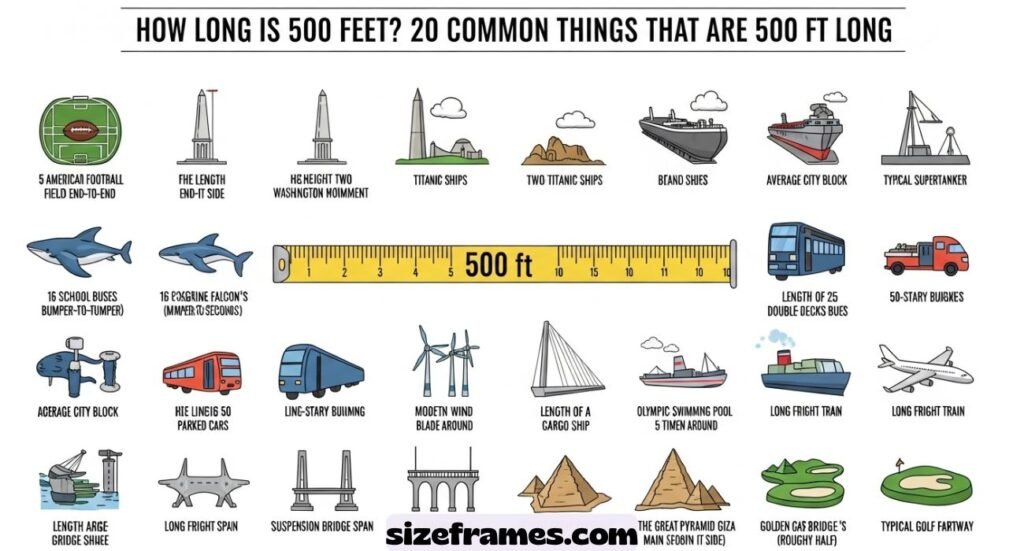
Understanding how long is 500 feet can make a big difference in daily life. This distance is roughly the height of a 50-story building or one and a half football fields. Knowing it helps in construction, urban planning, and even simple activities like measuring a park or driveway. It gives a tangible sense of space.
People often struggle to visualize 500 feet. By comparing it to familiar objects like five blue whales long or a medium-sized ferris wheel height, it becomes much easier. Even a short walk of 500 feet takes around two minutes, which helps connect abstract numbers to everyday experiences in a practical way.
Converting 500 Feet to Other Measurements
Converting 500 feet in meters, yards, inches, or miles provides perspective. In meters, it’s approximately 152.4, and in yards, about 166.67. 500 ft in miles equals roughly 0.0947. These conversions are useful for engineers, architects, or travelers who need to understand distance in different units quickly.
For smaller measurements, 500 ft in inches totals 6,000 inches, or 152,400 millimeters. Using these figures, it’s easier to visualize 500 feet in both short and long scales. Professionals in aviation or construction often rely on these conversions to estimate height, length, or clearance accurately for safety and planning purposes.
Iconic Structures Near 500 Feet

Many iconic structures approximate 500 feet long or tall, helping people visualize distance. The Seattle Space Needle height, at 605 feet, slightly exceeds 500 feet, making it a perfect reference. Large office buildings, towers, and bridges in the United States provide tangible examples for comparison.
For recreation, ferris wheel height and amusement park rides are relatable. Even large cruise ships measure about 1,000 feet, making half of one roughly 500 feet. These examples help Americans understand and visualize 500 feet both vertically and horizontally in urban, maritime, and recreational contexts.
Nature’s Version of 500 Feet
Nature often provides excellent references for 500 feet long objects. Some waterfalls in the U.S. fall roughly 500 feet vertically, creating dramatic sights. Tall trees, including old-growth redwoods, approach this height, making 500 feet comparison tangible for hikers or visitors exploring forests and canyons.
Canyons and cliffs also provide examples of 500 feet in depth. Imagining five blue whales long lined up helps connect this distance to natural forms. These references allow people to visualize 500 feet in a way that is both educational and awe-inspiring, bridging the gap between abstract numbers and reality.
500 Feet in Transportation
Many vehicles and transportation-related objects relate to 500 feet. Large cruise ships are roughly double this length, while some barges and oil tankers measure around 500 feet. These oil tanker dimensions and seagoing barge lengths show how maritime engineers plan for space and capacity.
On land, airport runway segments or taxiways sometimes reach 500 feet. These runway length segments are vital for smaller planes, ensuring safe takeoffs and landings. Understanding distance measurement 500 ft helps pilots and ground staff navigate effectively, combining practicality with 500 feet examples that are easy to visualize.
Recreational Spaces and 500 Feet
Recreational areas often incorporate 500 feet in design. Large piers extending into water, stadiums, and parks give Americans a tangible sense of pier length or field size. 500 feet long objects in leisure spaces allow people to plan, play, or enjoy activities efficiently.
Even amusement park rides like ferris wheel height or roller coasters align with 500 feet, providing memorable experiences. Comparing these attractions to five blue whales long or half a cruise ship size allows visitors to understand scale while enjoying fun activities. These examples make 500 feet comparison practical and engaging.
Read Also : How Long is 20 Meters? 19 Distances And Things That Are 20m
Engineering and Construction Insights
In engineering, 500 feet in meters or yards is crucial for building layouts, bridges, and office complexes. Engineers use distance measurement 500 ft to calculate materials, safety buffers, and project scopes accurately. This ensures structures meet standards and function properly.
Construction projects, including medium-length bridges, subway tunnels, and large docks, rely on accurate 500 feet examples. Knowing the length in different units like 500 ft in inches or miles helps planners and builders visualize 500 feet and translate abstract numbers into practical measurements for safe, efficient designs.
Everyday Life Applications of 500 Feet
Americans encounter 500 feet long objects in daily life, whether walking through large parks, across school grounds, or along piers. Even knowing that 500 feet takes about two minutes to walk makes the distance practical. These 500 feet examples help people estimate distances accurately in real-life scenarios.
For urban planners, pilots, or engineers, understanding how long is 500 feet is essential. From road layouts to airport taxiways, visualize 500 feet ensures safe and efficient movement. Combining nature, architecture, and transportation examples creates a holistic understanding of this critical measurement in everyday life.
FAQs
How many cars is 500 feet?
About 33–34 standard cars lined up bumper to bumper equal 500 feet, since an average car is around 14–15 feet long.
How long of a walk is 500 feet?
Walking 500 feet at a normal pace takes about 2–3 minutes, or roughly 200 steps for an average adult.
How long is 500 feet visually?
Visually, 500 feet is roughly 1.4 to 1.5 football fields long, or about one and a half fields end to end.
Is 500 feet a football field?
No, a standard American football field including end zones is 360 feet long, so 500 feet is longer than one full field.
Conclusion
Knowing how long is 500 feet helps people understand distance better in real life. It is about the height of a 50-story building or one and a half football fields. You can also think of five blue whales lined up or half of a large cruise ship. This makes 500 feet easy to picture and remember.
How long is 500 feet matters in many places like parks, airports, docks, and schools. Walking 500 feet takes only a few minutes, and structures like piers and bridges use this distance for safety and planning. Understanding it helps people measure, plan, and compare things correctly in everyday life, making learning about distances practical and useful.