How Long Is 1 Kilometer: A Complete Guide With Examples
A kilometer is a unit of distance. It is part of the metric system. How Long Is 1 Kilometer? It equals 1,000 meters or about 0.62 miles.
Many things in life can help us see a kilometer. Roads, tracks, and parks show this distance. Understanding it makes daily activities easier.
One kilometer is short for a car but long for walking. It takes about 10–12 minutes to walk. Knowing How Long Is 1 Kilometer helps in travel, sports, and exercise.
How Long Is A Kilometer?
A kilometer is a unit of length in the metric system and is equal to exactly 1,000 meters. If you are used to miles, then 1 km in miles is approximately 0.621 miles. To put this into perspective, walking 1 km at a normal pace usually takes about 10 to 12 minutes, while cycling 1 km takes roughly 2 to 4 minutes depending on speed. In driving terms, traveling 1 km at 60 kilometers per hour (km/h) or 37 miles per hour would take just about a minute.
Here is a quick conversion table to help you understand the length of 1 km in different units:
| Unit | Equivalent of 1 Kilometer |
| Meters | 1,000 meters |
| Centimeters | 100,000 cm |
| Millimeters | 1,000,000 mm |
| Miles | 0.621 miles |
| Feet | 3,280.84 feet |
| Inches | 39,370 inches |
| Yards | 1,093.61 yards |
Understanding these conversions helps in various practical situations, from fitness tracking to road navigation, and provides a clear understanding of road distance measurement in both metric and imperial systems.
Things That Are 1 Kilometer Long
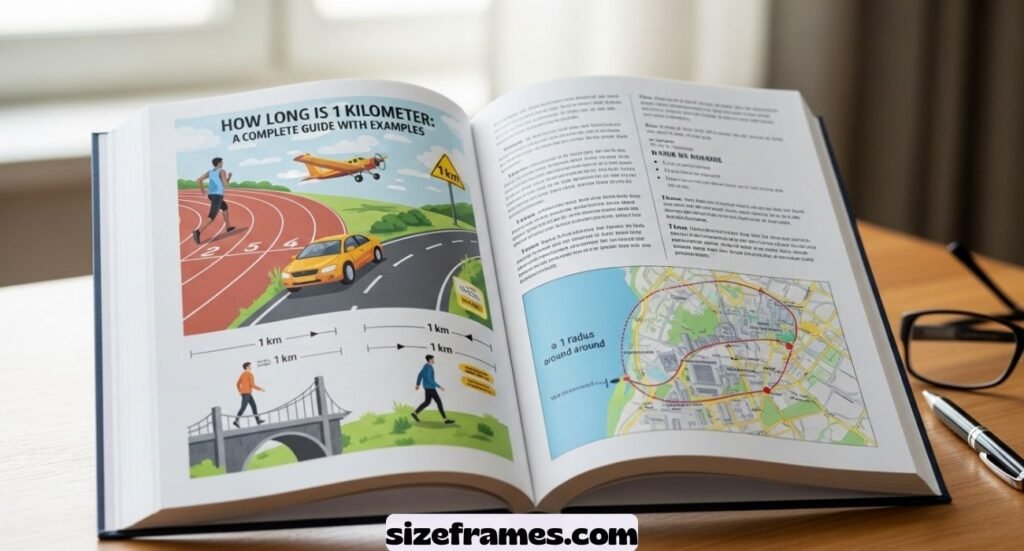
Visualizing 1 km in meters or miles can be challenging without real-life examples. Fortunately, there are many objects and distances that are roughly 1 kilometer long, which can make understanding the distance of 1 km much easier. These examples range from sports facilities to urban layouts, small airports, and even parks.
Runway at Small Airport
A small airport runway often measures between 1.2 to 2.5 kilometers in length. These runways are long enough to safely accommodate small commercial planes, private jets, and regional flights. For instance, in many US regional airports, the runway length is slightly over 1 km, ensuring that aircraft can take off and land safely. Understanding airport runway length can give you a real-world sense of how long a kilometer truly is. Small airports also contribute to local economies, allowing travelers to access rural areas more quickly and providing transportation hubs for businesses.
Train
Trains, especially long freight or commuter trains in the US, can stretch nearly 1 km in length. Such trains are capable of carrying hundreds of passengers or massive amounts of cargo in a single trip, which is more efficient than road transport. Knowing the length of 1 km in the context of trains helps us understand how vast this distance can be. For example, some freight trains in Texas or California easily exceed a kilometer, which highlights how the metric system distance applies to large-scale transportation.
Airstrip
A typical airstrip is around 1 km long. These are smaller than airport runways but are essential for private planes, emergency services, and agricultural aviation. In the US, airstrips are commonly found in rural areas and serve as hubs for recreation, farming operations, and medical emergencies. The 1 km length ensures that small to medium aircraft can take off and land safely, making it an easy way to visualize travel distance in km.
Road Segment
Many city and country road segments measure about 1 km. Understanding this helps drivers, cyclists, and pedestrians gauge travel times. For example, in urban areas, city block distance in some cities is roughly 250 meters, so four blocks equal about 1 km. Measuring 1 km in miles for US readers, this is just over half a mile. Road planners often use road distance measurement to improve traffic flow and connect neighborhoods efficiently.
Seawall
Seawalls are built along coastlines to protect land from erosion and flooding. Many seawalls stretch for more than 1 km. In places like California or Florida, seawalls play a critical role in protecting coastal communities from waves and storm surges. The seawall length gives us another perspective on how significant 1 km is in environmental protection projects.
A Soccer Field
A regulation soccer field ranges from 90 to 110 meters in length. To cover 1 km, you would need to line up roughly 9 to 11 soccer fields end-to-end. In the US, soccer fields are often used in community parks and school sports programs, which makes this a relatable example of football/soccer field length for both children and adults.
The Length of a Football Field
A standard American football field measures 100 meters in length, excluding the end zones. To visualize 1 km, you would need ten football fields lined up one after another. Stadiums, college fields, and NFL venues provide clear, tangible ways to understand the length of 1 km in terms that are familiar to US audiences.
The Distance of Four City Blocks
Many US cities have blocks that measure around 250 meters each. Walking four blocks will approximately equal 1 km. For people in cities like New York, Chicago, or San Francisco, this is an easy reference to grasp the distance of 1 km in a daily commute or exercise routine. It also helps illustrate walking 1 km in a familiar urban setting.
The Sturdy Running Track
A standard running track, commonly found at schools and athletic centers in the US, has an inner lane of 400 meters. Completing two and a half laps on this track equals 1 km. Understanding running track length in this way helps athletes and fitness enthusiasts accurately measure distance during training or races. It also shows how metric system distance integrates into sports and recreational activities.
The Scenic Nature Trail
Nature trails in US parks and reserves often have well-marked distances, with 1 km being a common trail length. Walking or jogging on a 1 km nature trail allows people to enjoy the outdoors while tracking their fitness. Trails like these provide opportunities to measure nature trail distance, observe wildlife, and experience green spaces without needing a GPS device. These trails also encourage environmental awareness and promote a healthy lifestyle.
The Expansive Dog Park
Large dog parks can easily stretch 1 km in length, giving pets room to run, play, and socialize. In cities like New York, Los Angeles, and Chicago, dog parks are popular community hubs. The dog park length allows owners and pets to enjoy space safely and responsibly. This example highlights how 1 km in meters translates into practical, recreational use in urban environments.
Understanding How Long Is 1 Kilometer in Everyday Life
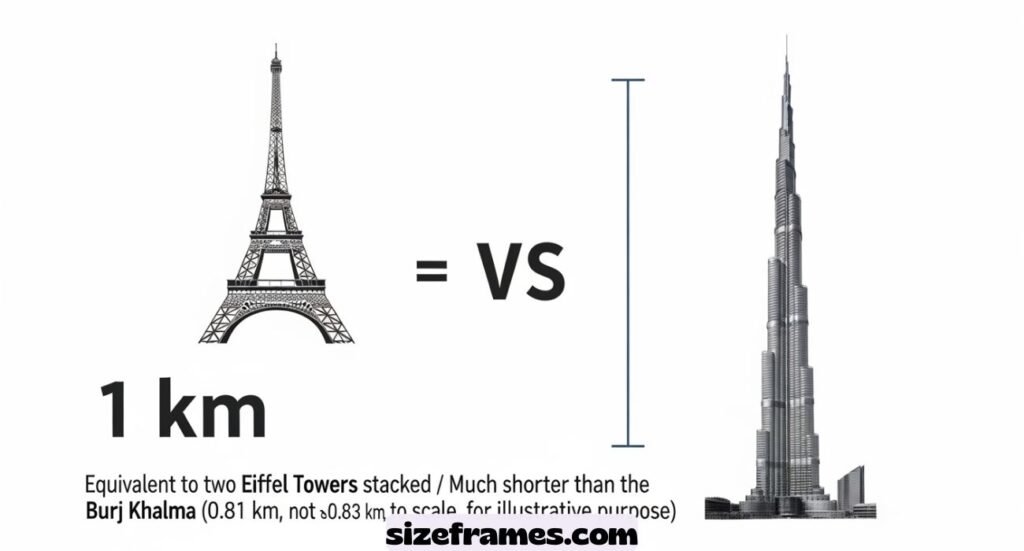
A kilometer is a standard unit in the metric system that measures distance. In the US, people often convert 1 km in miles to understand it better, which equals approximately 0.621 miles. Knowing the length of 1 km is useful in walking, driving, cycling, and fitness tracking. It helps plan activities, travel distances, and exercise routines accurately.
Visualizing 1 km can be tricky, but it is comparable to everyday objects and locations. For instance, a standard city block or a small park trail can represent the distance of 1 km. Understanding this measurement improves awareness of travel times, urban layouts, and outdoor activity planning while bridging the gap between metric and imperial units.
Read Also : 25 kg: Everything You Need to Know, With Practical Examples
How 1 Kilometer Compares to Miles, Meters, and Feet
One kilometer equals 1,000 meters, making it easy to measure long distances accurately. In US terms, 1 km in miles is roughly 0.621 miles, while in feet, it is about 3,280.84 feet. This conversion is essential for travelers, athletes, and urban planners who need to visualize kilometer to miles and kilometer to meters accurately.
Converting 1 km in meters and miles helps in daily activities like running, cycling, or commuting. For example, runners can calculate laps on a running track length while cyclists can estimate route distances. Understanding these conversions enhances metric system distance awareness, making it easier to relate kilometers to familiar distances in the US.
Visualizing 1 Kilometer Through City Blocks and Streets
In many US cities, four standard city blocks are approximately 1 km long. Walking or cycling this distance usually takes about 10–15 minutes, depending on pace. Using city block distance as a reference allows pedestrians and tourists to estimate travel times efficiently without relying on devices or maps.
Urban planners also use road distance measurement when designing neighborhoods, ensuring streets, parks, and facilities fit standard units. Knowing how long is 1 kilometer in terms of blocks or street segments helps residents and visitors understand local geography and navigate urban spaces effectively, combining convenience with accurate measurement.
Measuring 1 Kilometer on Sports Fields and Tracks
A standard running track length in the US inner lane is 400 meters, so completing two and a half laps equals 1 km. This measurement is vital for athletes training for races or marathons. Understanding running track length allows fitness enthusiasts to plan workouts and monitor performance effectively.
Soccer and football fields also provide relatable comparisons. Ten football fields or roughly nine soccer fields end-to-end equal about 1 km. Visualizing football/soccer field length gives athletes, coaches, and spectators a practical way to gauge distance, enhancing fitness routines, sports planning, and event logistics in daily life.
How Small Airports and Airstrips Demonstrate 1 Kilometer
Many small airport runways in the US measure between 1 and 2.5 kilometers. This length accommodates small commercial aircraft and private planes safely. Knowing airport runway length helps travelers, pilots, and aviation enthusiasts understand the practical applications of 1 km in meters or miles.
Airstrips in rural areas often measure about 1 km, serving emergency services, agricultural flights, or recreational aviation. These facilities illustrate how long is 1 kilometer in real-life infrastructure. Observing aircraft takeoffs or landings provides a tangible sense of distance while highlighting the importance of metric system distance in aviation planning.
Nature Trails and Outdoor Spaces That Span 1 Kilometer
Many US parks have nature trail distances of about 1 km, perfect for walking, jogging, or cycling. Trails provide both exercise and a chance to explore local flora and fauna. Knowing the distance of 1 km helps visitors gauge walking times, plan workouts, or enjoy outdoor activities safely.
Dog parks and open green spaces can also stretch 1 km, giving pets and owners ample room to move. Measuring dog park length allows for proper planning of recreational areas and promotes community engagement. Trails and parks make 1 km easy to visualize in natural settings for everyday use.
Roads, Highways, and the Travel Distance of 1 Kilometer
A road segment of 1 km is easy to measure on highways or city streets. Traveling this distance in a car at 60 km/h takes about a minute. Understanding travel distance in km helps drivers estimate travel times, fuel usage, and trip planning.
Urban streets often include multiple road distance measurements totaling 1 km. Knowing how long is 1 kilometer on streets and roads improves commuting efficiency, traffic awareness, and route planning. For cyclists and pedestrians, this information is essential for safe and accurate travel planning.
Read Also : How Much Is 3 Ounces? 11 Common Things That Weigh 3 Oz
Coastal Seawalls and Engineering Examples of 1 Kilometer
Seawalls protect coastlines from erosion, and many US seawalls extend 1 km or more. This distance shows how infrastructure projects rely on precise measurements. Understanding seawall length highlights the importance of engineering and planning to safeguard communities and natural resources.
From Miami to California, coastal defenses illustrate the practical applications of metric system distance. Observing a seawall stretching 1 km provides perspective on how long is 1 kilometer, making abstract numbers tangible. Engineering projects, environmental protection, and recreational spaces all rely on such measurements.
FAQs
How long is 1 km in minutes?
Walking 1 km at a normal pace takes about 10–12 minutes.
What is 1 km equal to in miles?
1 km is approximately 0.621 miles.
How long of a walk is 1 km?
Walking 1 km covers roughly 0.62 miles, usually taking about 10–12 minutes.
How far away is 1 km?
1 km is equal to 1,000 meters or just over half a mile.
Conclusion
Understanding How Long Is 1 Kilometer helps in daily life. One kilometer equals 1,000 meters or about 0.62 miles. Walking, running, or cycling 1 km shows how far this distance is in real life. It also helps with school activities, sports, and traveling around town. Knowing 1 km makes measuring distances easy and clear.
Many objects and places show the length of 1 km. Four city blocks, ten football fields, or a small airport runway give a good idea of this distance. Trails, roads, and parks also help visualize How Long Is 1 Kilometer. Learning this measurement makes planning, exercising, and understanding maps simple and fun for everyone.